
A friend asked me for a wooden cube. No joinery, no moving parts, no brief beyond the shape. Simple on paper. In practice, every face has to match, every corner has to land at ninety degrees, and a cut that drifted has nowhere to hide.
I made it from reclaimed wood, with no jointer, no planer, and only a small table saw. The block was full of cracks. Getting it square was the real project.
Squaring the block
Without a jointer or a thicknesser, every face depended on the previous one, and on a saw that is not built for this. Opposite faces have to be parallel; adjacent faces have to be square. I worked face by face, checking and recutting. This step took more time than the rest of the project combined.
Epoxy, recut, finish
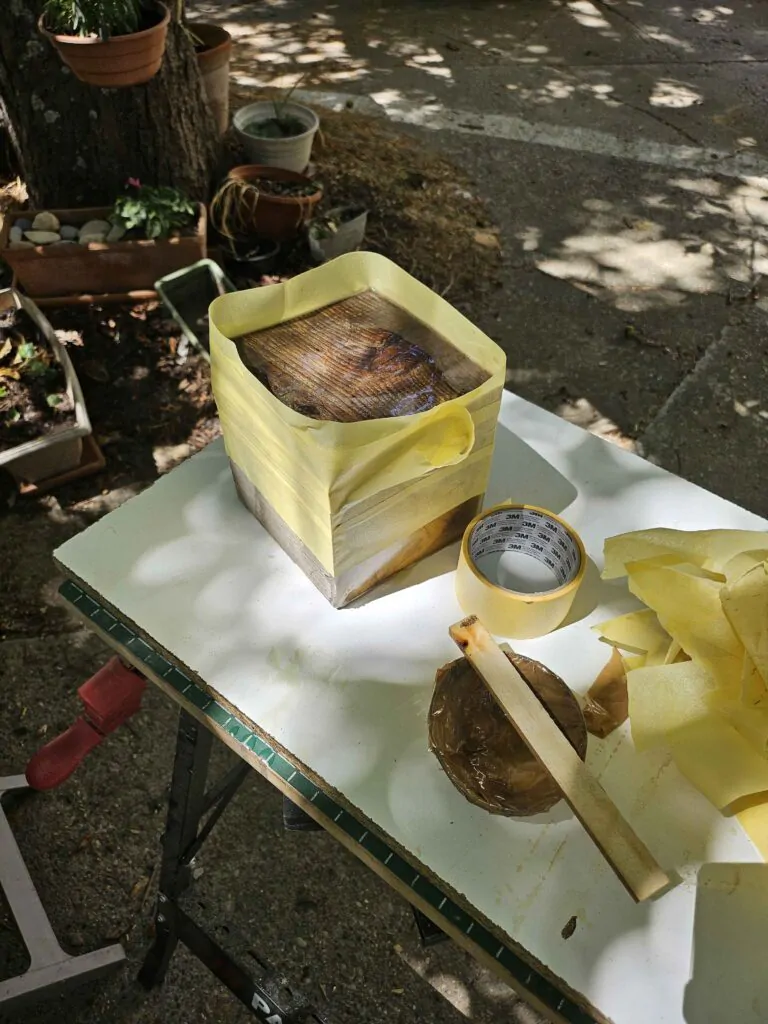
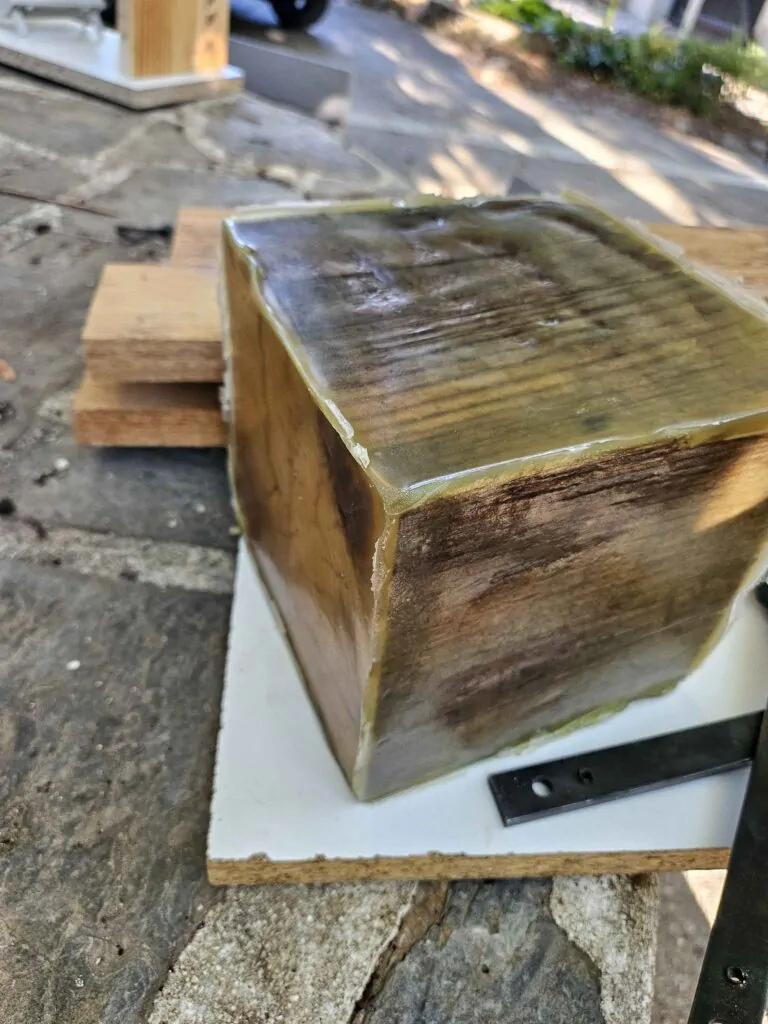
The wood was cracked on several faces. I built a tape dam on each one, poured a layer of epoxy, and let it cure before turning the block.
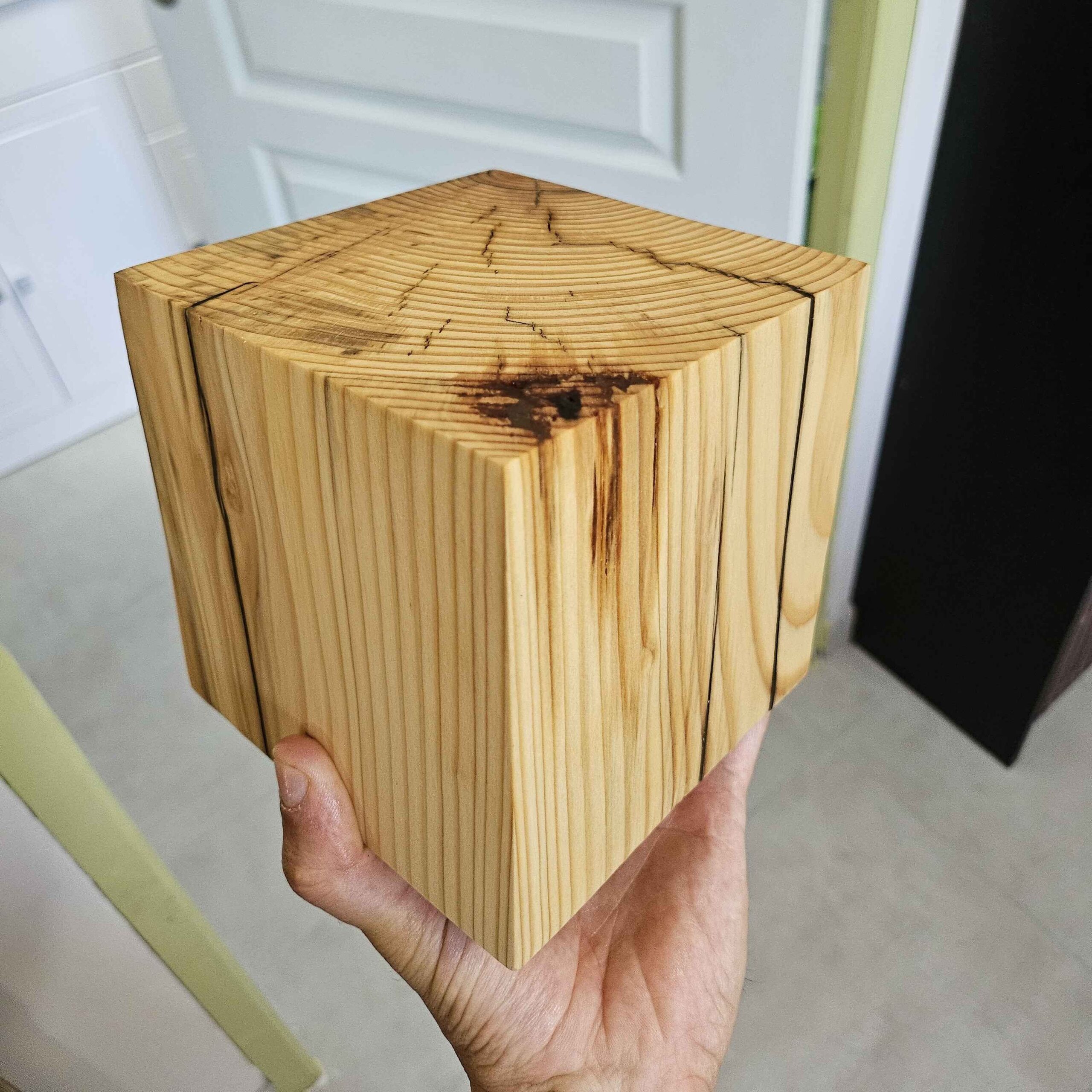
Once the resin had set, I recut the cube: faces back to flat, overflow gone, epoxy left only in the cracks, flush with the wood. Then progressive sanding, then oil. The grain came up; the cracks stayed visible, but as part of the surface.
Final result
A small cube for a friend, from wood that was not meant to be one.
Feedback and lessons learned
A cube is a test of references: one flat face, one square edge, then everything else from those two. Epoxy keeps cracked reclaimed wood in the piece. It does not fix geometry. The recut after curing is what makes it a cube again.