
My very first woodworking project, before any formal training
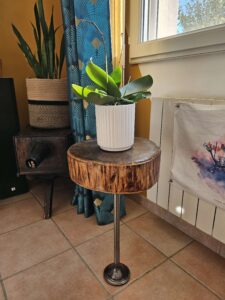
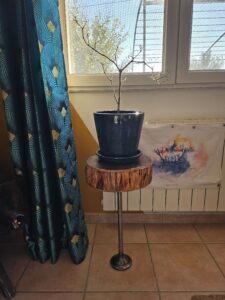
I wanted to build something with what I had on hand: a wood log slice (also called a wood round) and a boat engine valve used as the base.
The goal was simple: turn reclaimed parts into a small side table that was stable, functional, and visually unique.

1. Starting point: reclaimed materials
At that time, I had no formal woodworking background, just an idea and the motivation to learn by doing.
The tabletop is a natural wood round, irregular and not perfectly flat underneath.
The base is an old boat engine valve, repurposed from its original use.
This project immediately taught me how to work with material constraints rather than against them.
2. Finding the balance center of the wood
The first challenge was to find the right fixing point on an irregular piece.
I used a simple method:
- place the wood on the edge of a table;
- slide it just enough to reach a balance point;
- draw a line;
- rotate the wood slightly and repeat.
The intersection of all lines gave me the drilling point.
This works especially well with uneven or non-flat pieces.
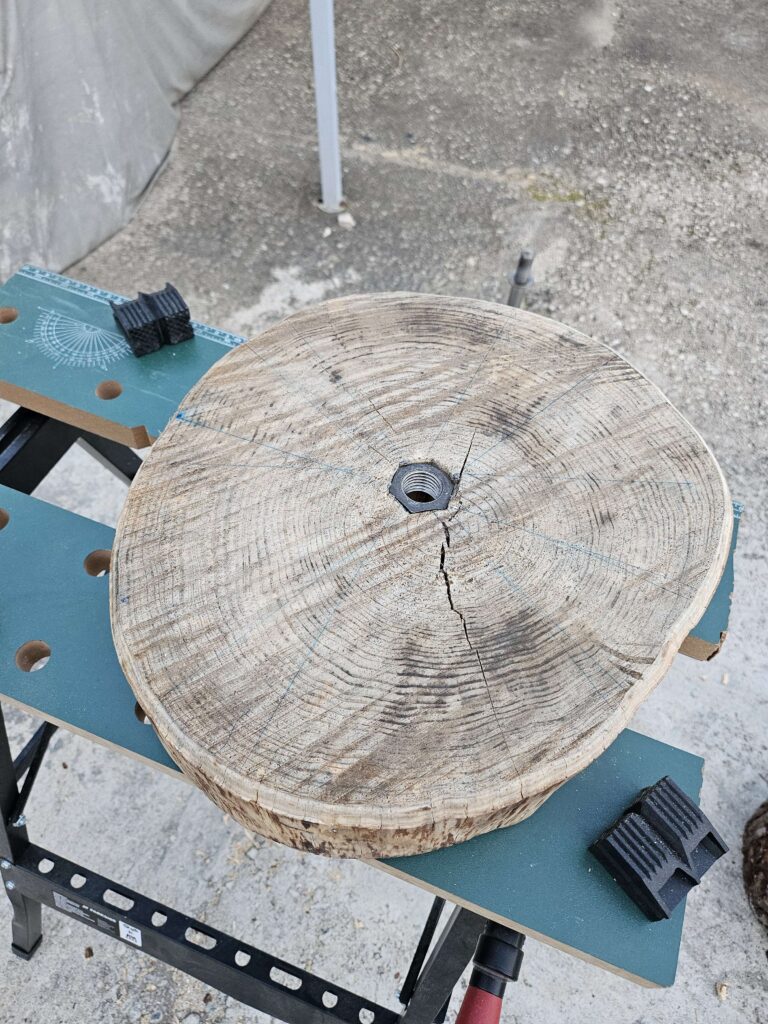
3. Drilling and bolt fixing
Once the center point was found, I drilled the wood and inserted a bolt.
The bolt was secured in place with a small amount of epoxy for long-term hold.
This step was critical, because the final alignment of the table depends on the bolt axis.
4. Sanding and epoxy finish
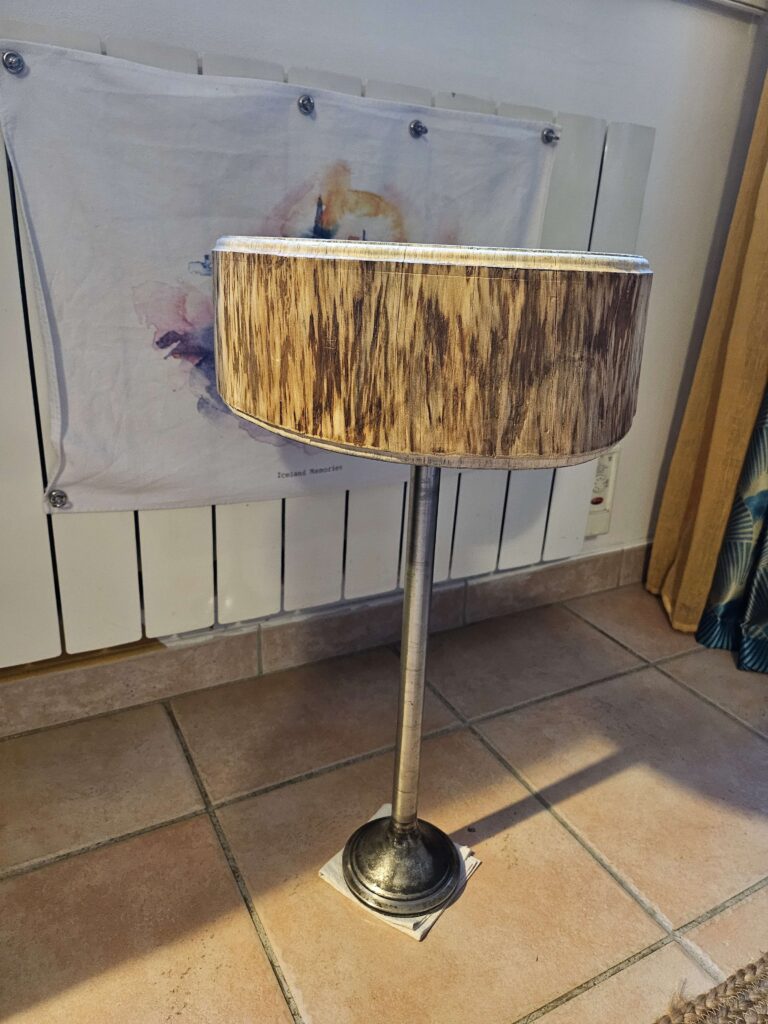
After assembly, I sanded the surface and applied epoxy as a protective finish (varnish-like effect).
The epoxy helped protect the wood while highlighting its grain and natural character.
Finally, I screwed the valve onto the bolt to complete the table.
5. Final result and observed limitations
The underside of the wood round is not perfectly flat, so the piece is not “machine-perfect.”
However, the top surface is visually level enough thanks to the bolt positioning.
The final look keeps a handmade and raw identity, which matches the reclaimed spirit of the project.
If I were to do it again
If I were to build it again, I would improve a few things:
- check table level when permanently fixing the bolt (if the bolt is not square to the ground, the table won’t be level either);
- add reinforcements in areas where the wood may crack;
- apply epoxy in warmer weather, or use a heat gun to improve flow and reduce surface defects.