
My first complete project using workshop machines
It was the first time I used workshop machines in a complete build.
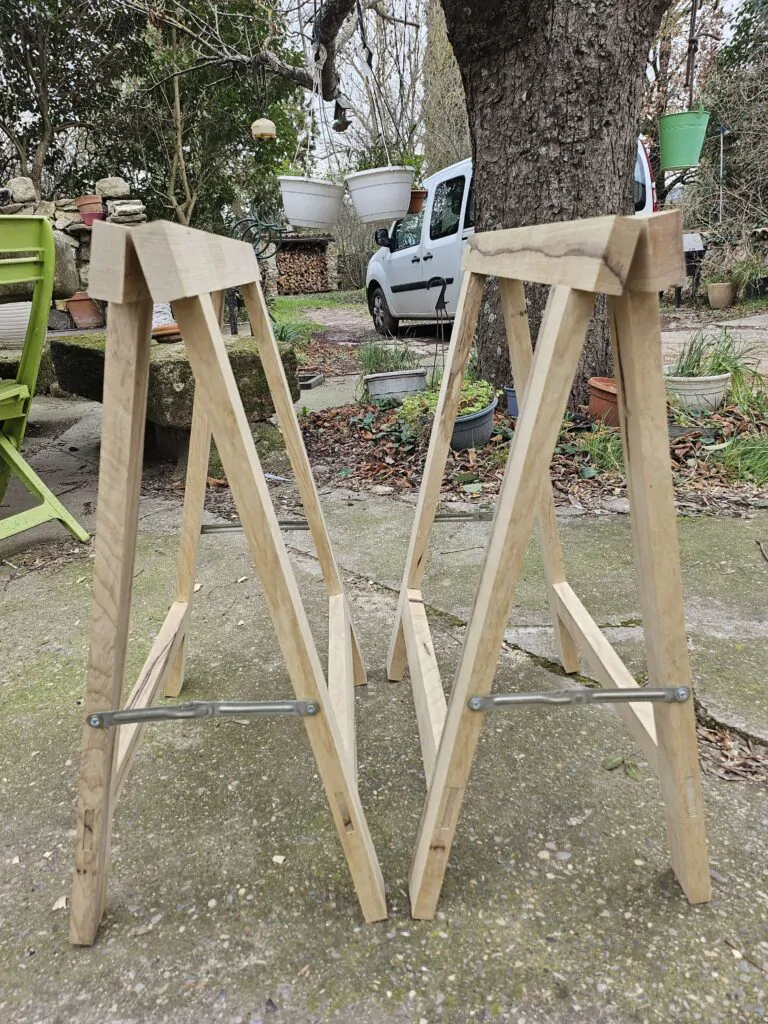
The goal was to make a pair of simple, sturdy, and repeatable sawhorses, following a clear workflow from stock preparation to final glue-up.
1. Preparation and layout
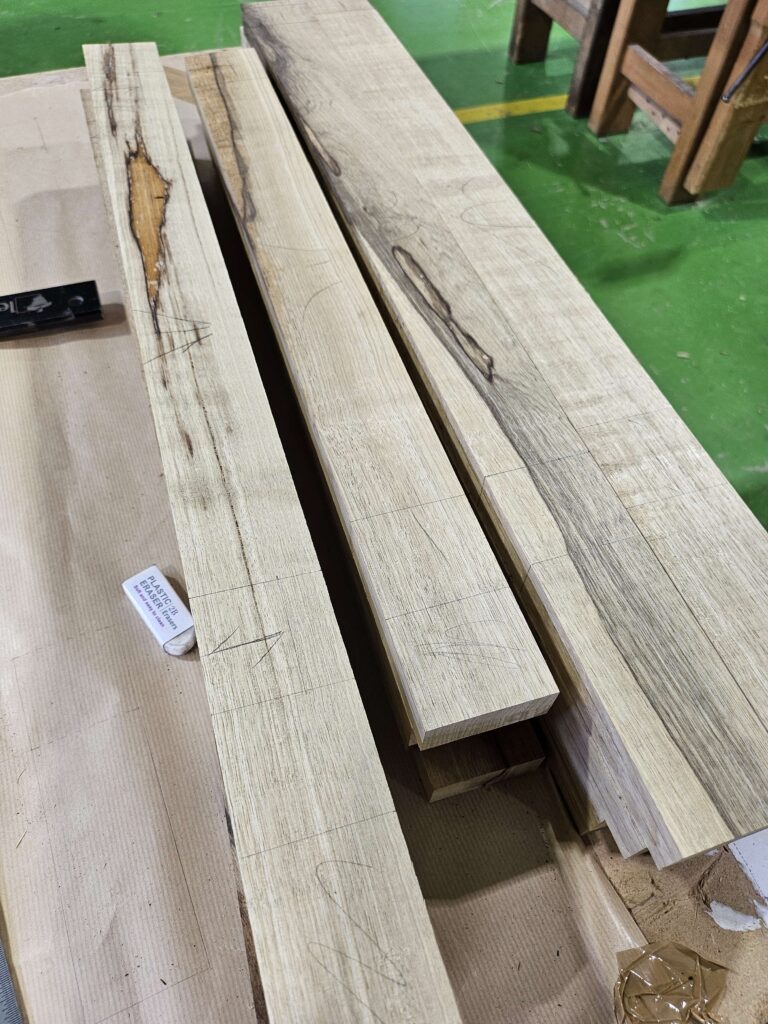
Before machining, I prepared the parts and marked all key references: sections, lengths, angles, and joint locations.
One of the strengths of this project was its repeatable logic: once one part and one setup were validated, the same process could be repeated for all matching pieces.
2. Jointing and planing
The first machine steps were stock preparation:
- jointing to establish one flat face and one straight reference edge;
- planing to bring all parts to consistent thickness.
This stage was essential to ensure accurate machining and easier final assembly.
3. Cutting to size on the panel saw
Once the stock was prepared, I used the panel saw to cut all parts to final dimensions and prepare the repeated elements for both sawhorses.
Consistent cutting was important to keep the overall geometry clean and balanced.
4. Mortises and tenons
I then machined the traditional joints:
- mortises on the mortiser;
- tenons on the tenoner.
This stage required careful setup and positioning so the joints would be both precise and practical to assemble.
5. Dry fit, glue-up, and squareness checks
Before gluing, I completed a full dry fit to verify all joint fits and alignments.
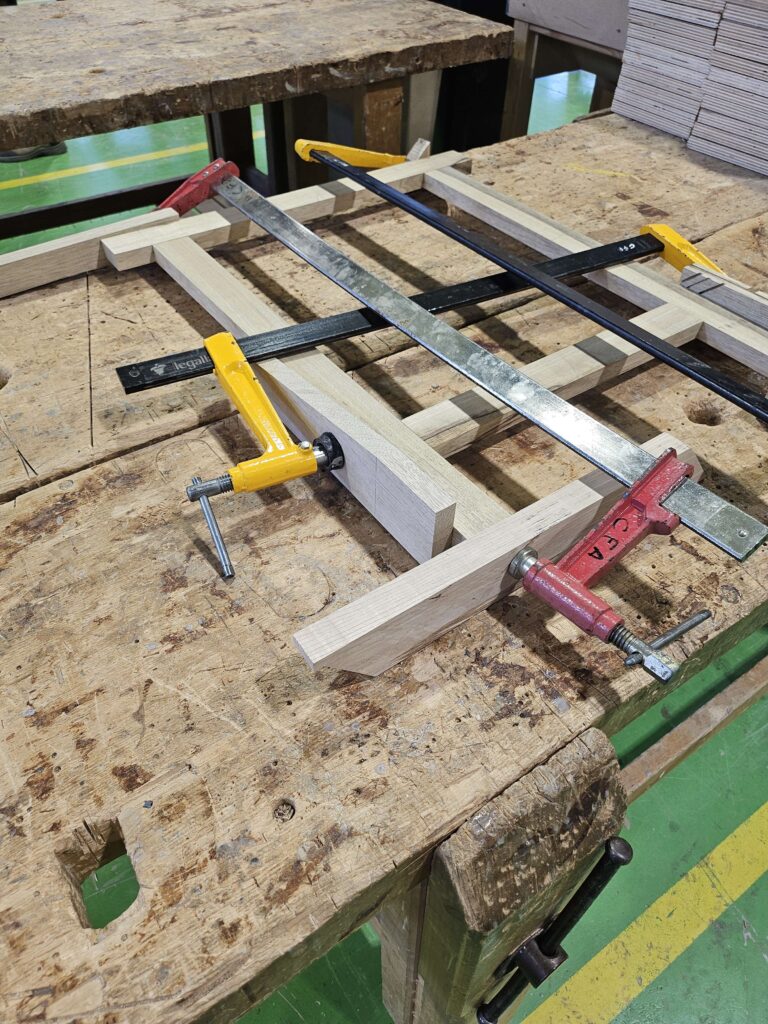
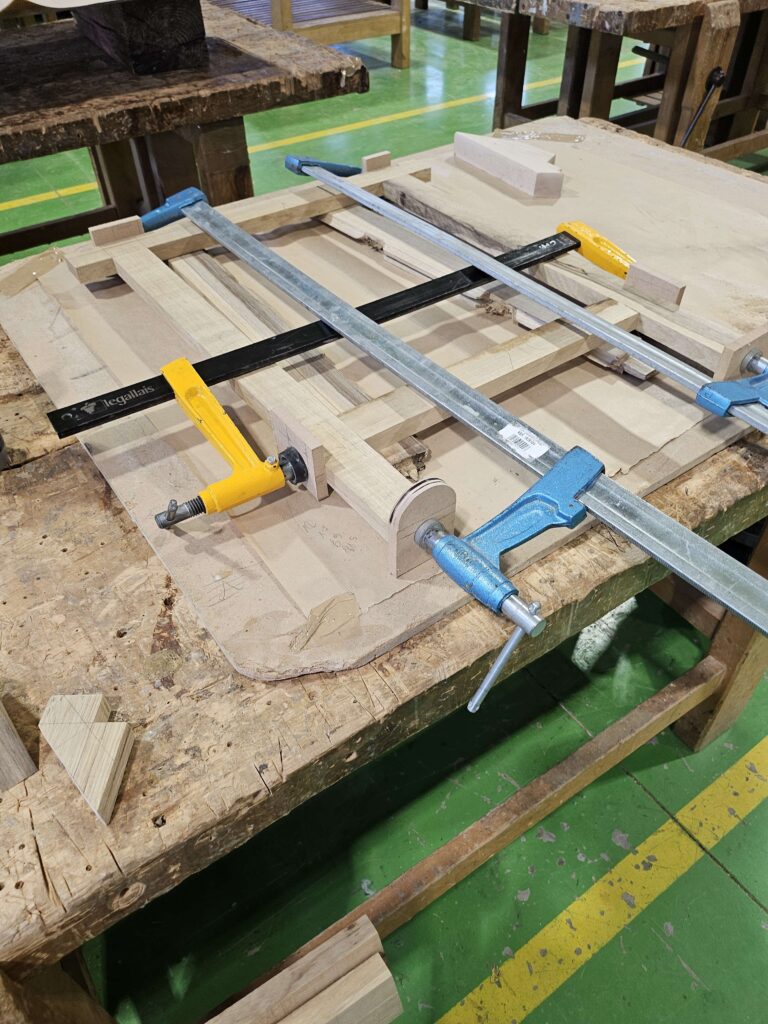
Glue-up was done with proper clamping blocks and progressive tightening.
The key point was to monitor squareness throughout clamping to prevent twist or distortion.
6. Repeating the process for the full pair
The project was simple and very instructive because it relied on repetition:
- same sections;
- same machining operations;
- same quality checks.
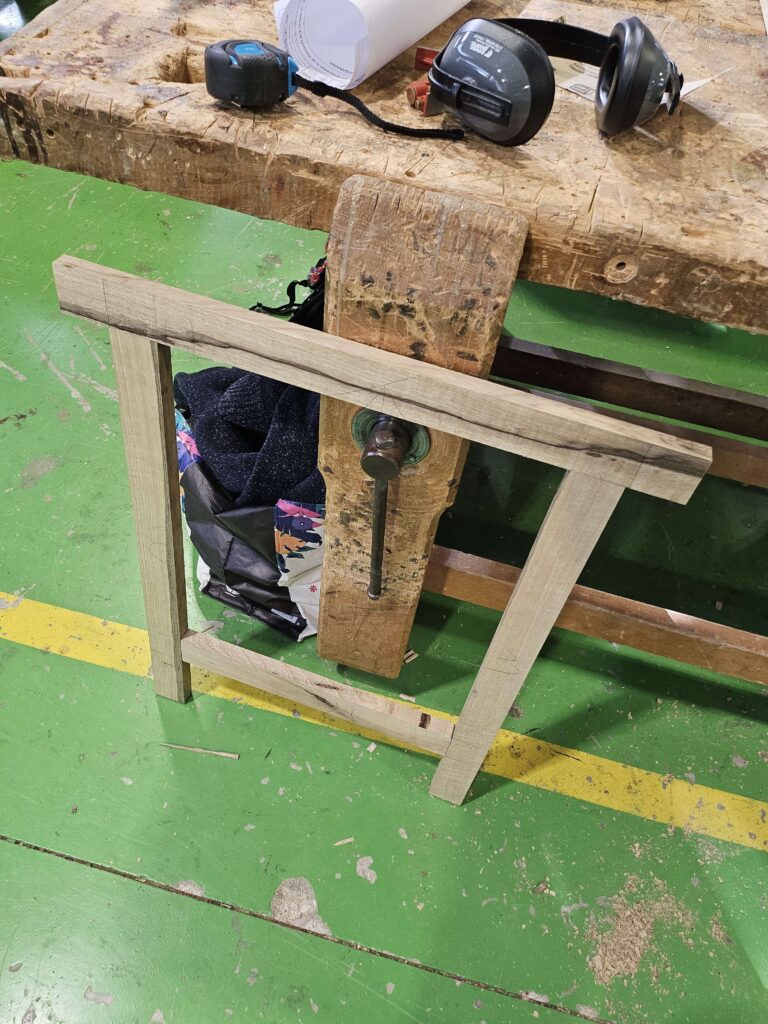
In practice, the method was repeated four times to produce the two complete sawhorses.
Final result
This project taught me how to run a full machine-based workflow in the workshop, from stock preparation to final glue-up, with a strong focus on precision and repeatability.
Beyond the sawhorses themselves, the most valuable outcome was learning the process.
What this project taught me
- establish reliable references from the start of stock preparation;
- sequence machine operations in the right order;
- manage glue-up with proper clamping blocks and squareness checks;
- gain efficiency by repeating the same validated operations.