
A client asked me for a bread rest in oak: a square tray on a wide base that gets narrower towards the top. I only had a few photos and approximate measurements. No drawing, no exact angles. I could see what it should look like, but not how to cut it.
See the repository with the blueprints that I made.
1. A test piece in scrap
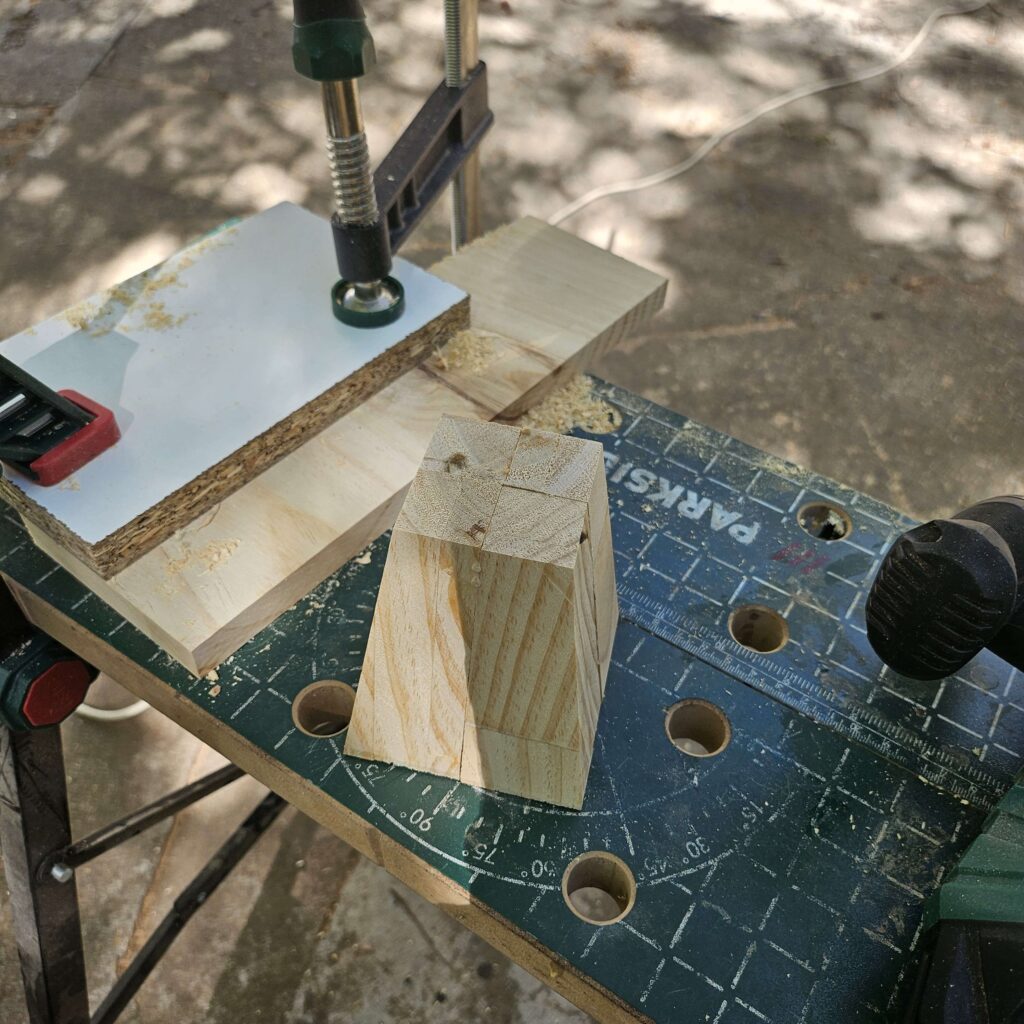
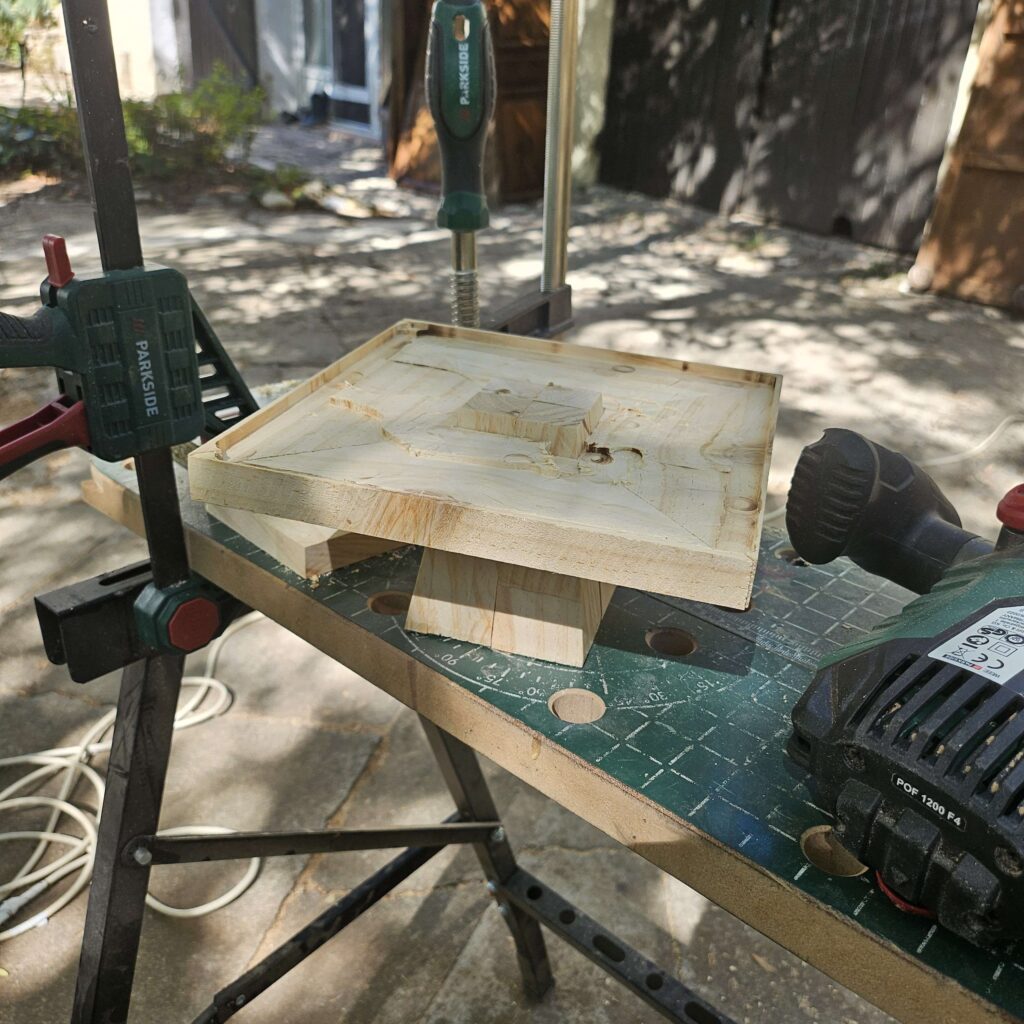
I did not start with the oak. I used wood I already had and built a full-size test on the table saw, to see what would be difficult.
The base has four angled sides. If one angle is wrong, it shows on the whole piece. The tray is cut at 45° on each corner. If the mitres do not close, the top looks messy.
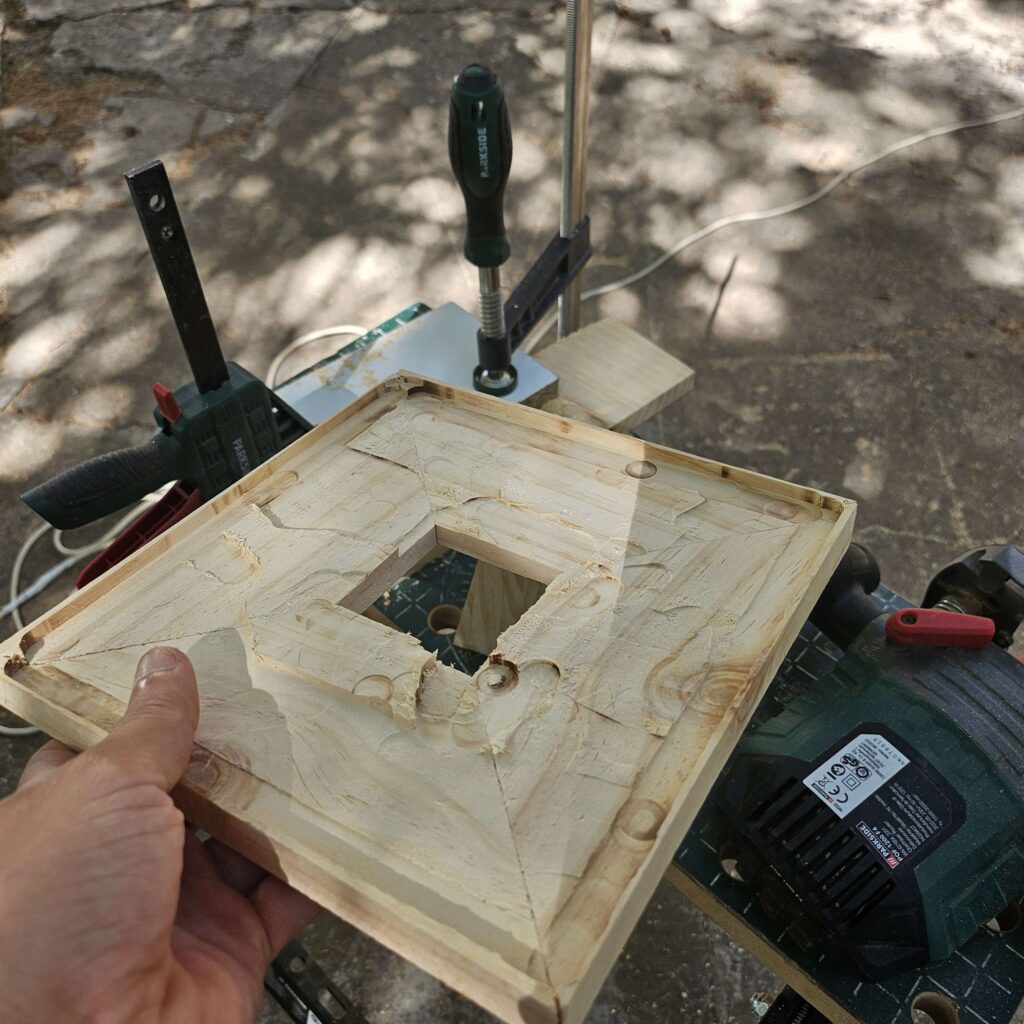
The test piece was not pretty. That was the point. It showed what not to do: which face to use as a reference, where the 45° joints open, how wide the base really needs to be once the sides are angled, and how deep to cut the tray so the rim looks right.
2. Making templates
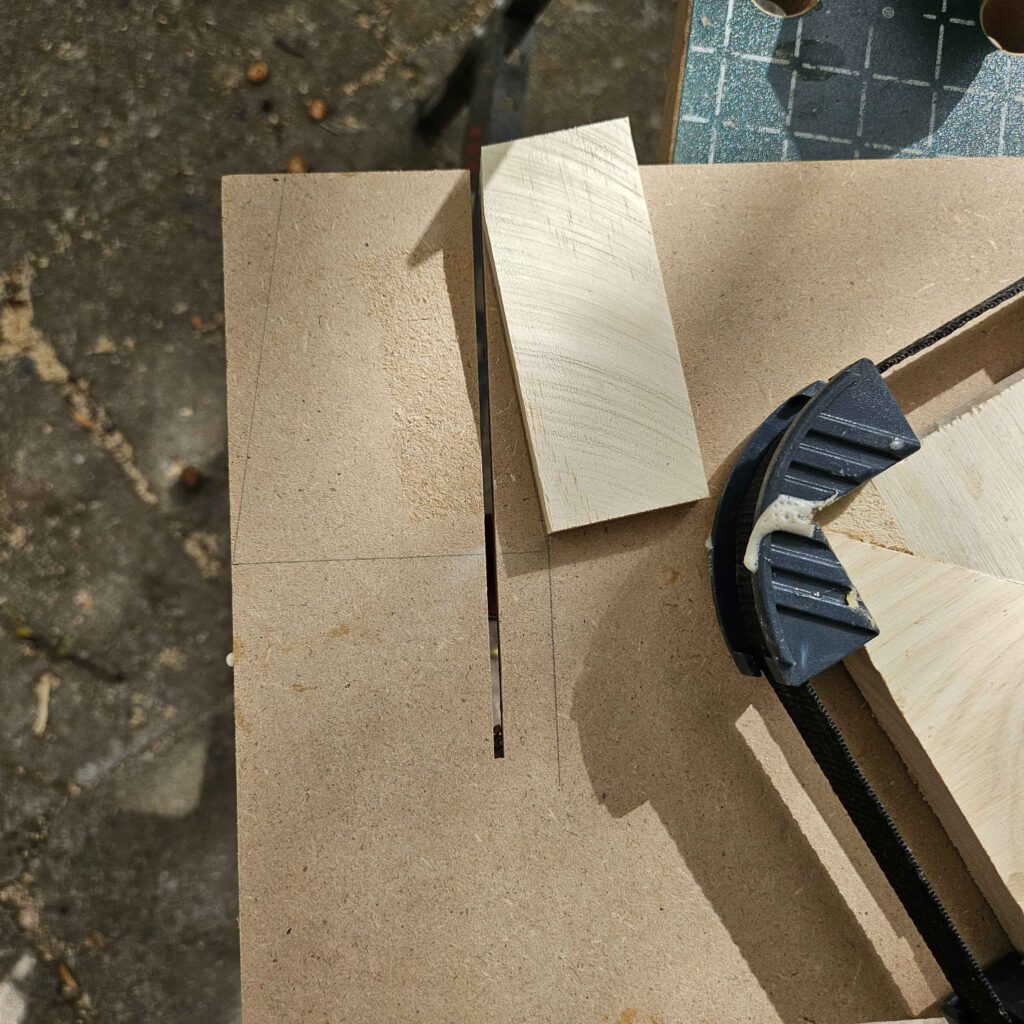
Then I made templates. One to cut the four angles of the base the same way each time. Another to cut the 45° corners of the tray so the last joint actually closes. The goal was simple: repeat the same cut, instead of adjusting by eye on every piece.
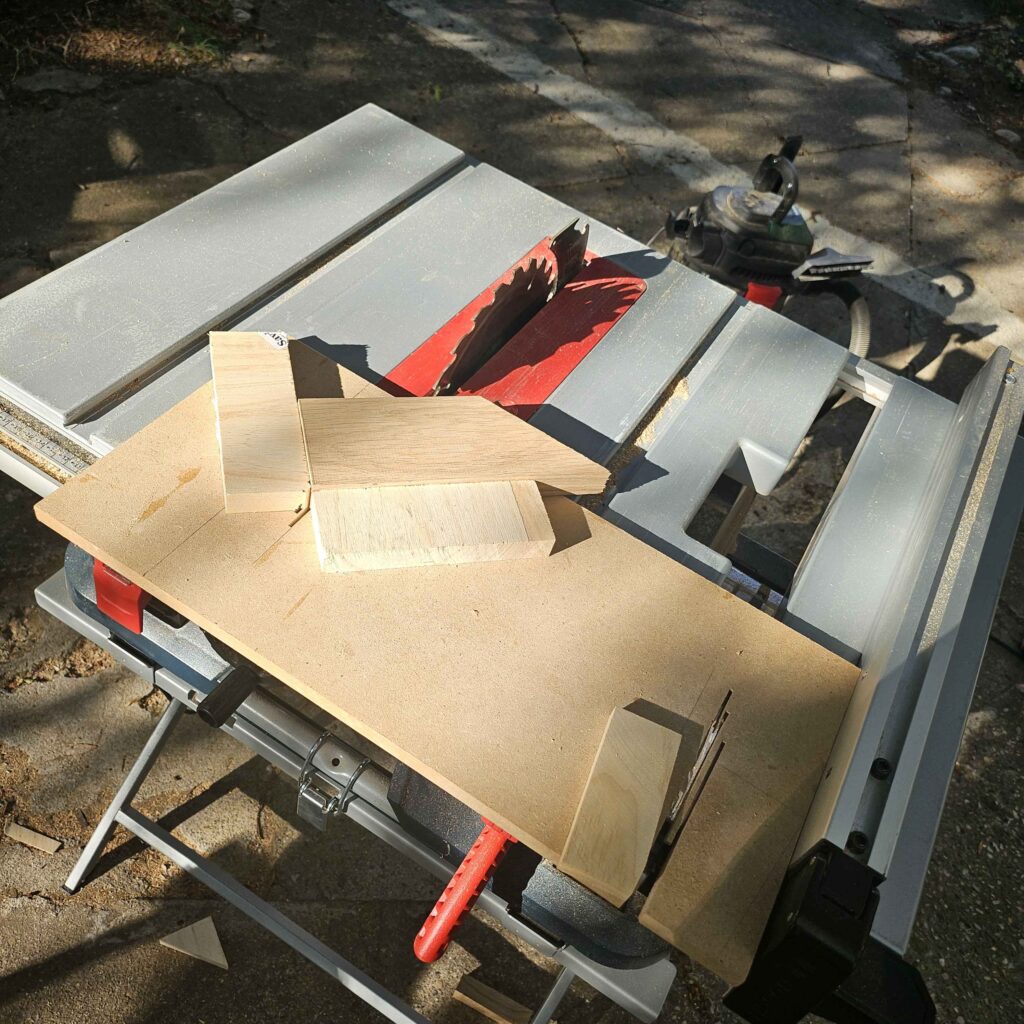
3. Gluing the base
The oak for the base was too wide to use in one piece. I had to glue several boards together. Once it was dry and solid, I used the template to cut the four angled sides.
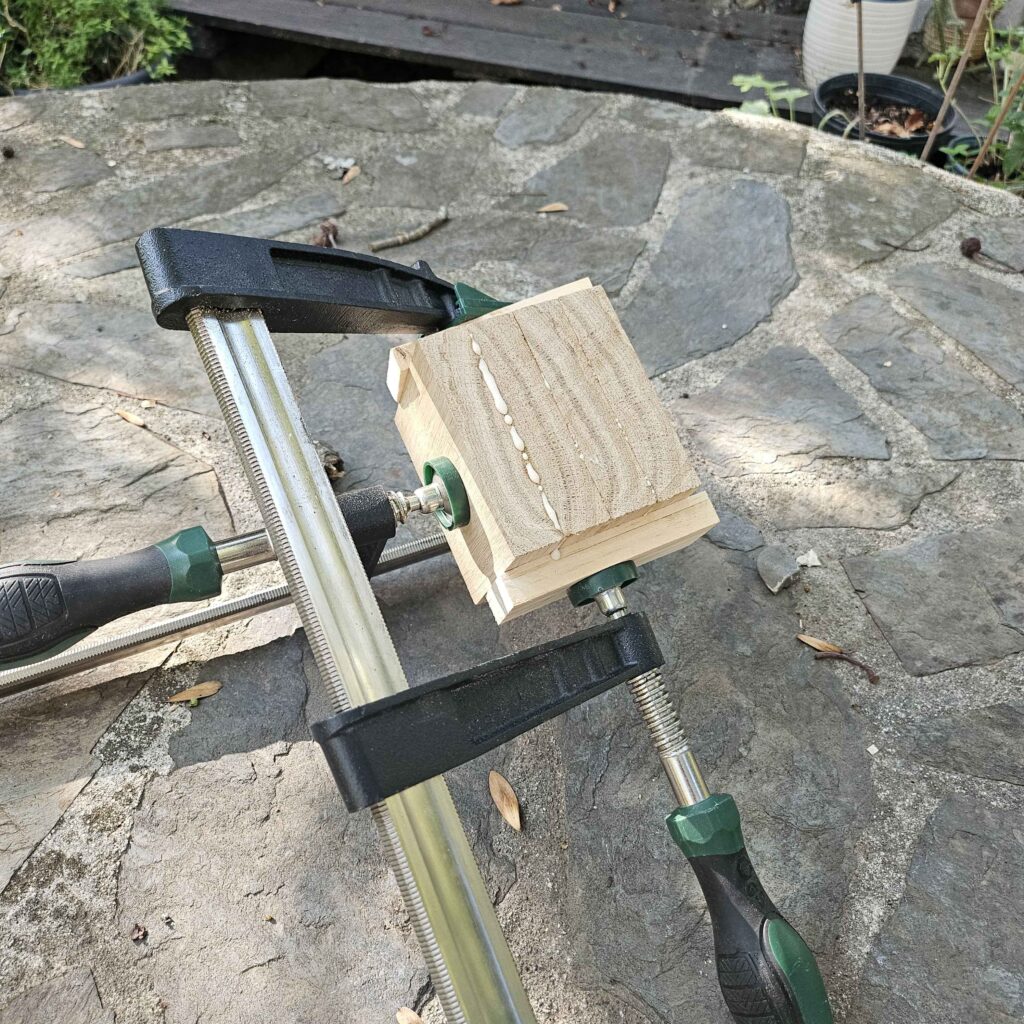
4. Hollowing the tray
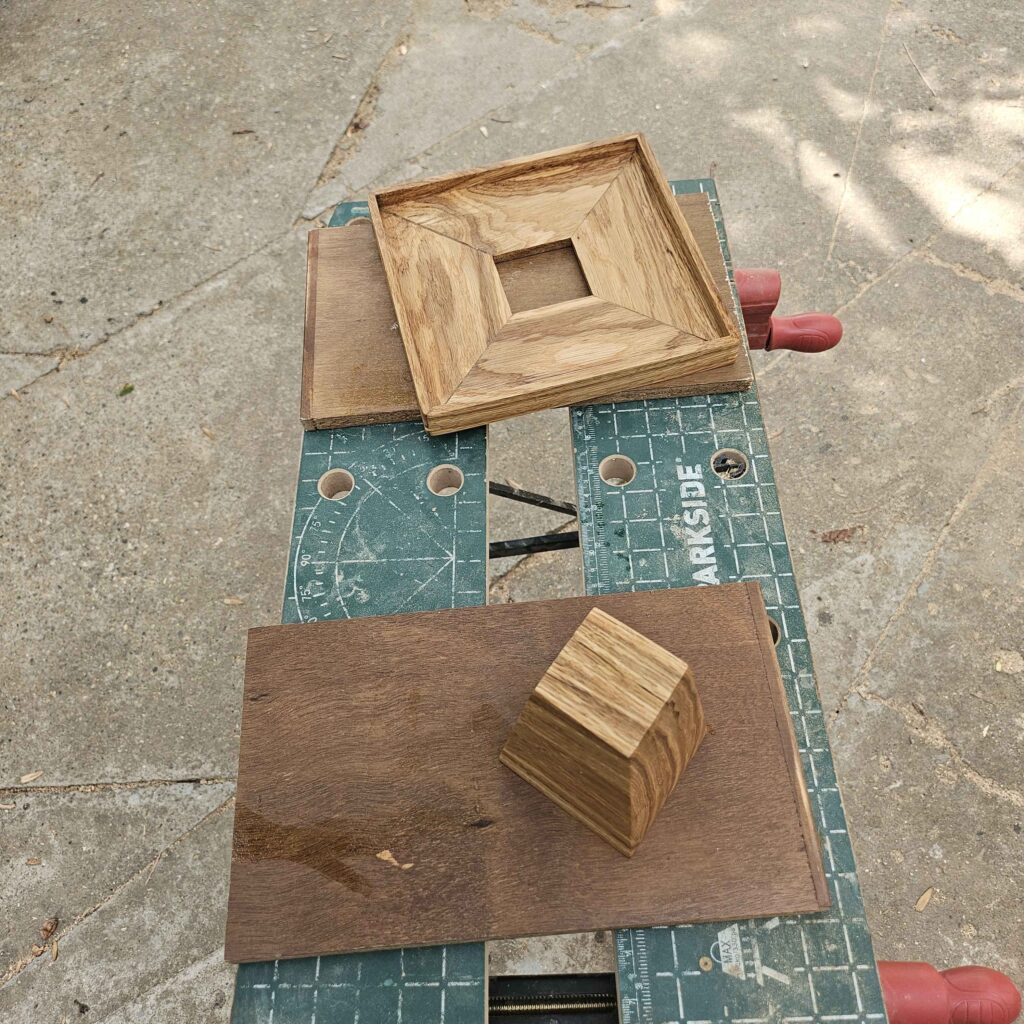
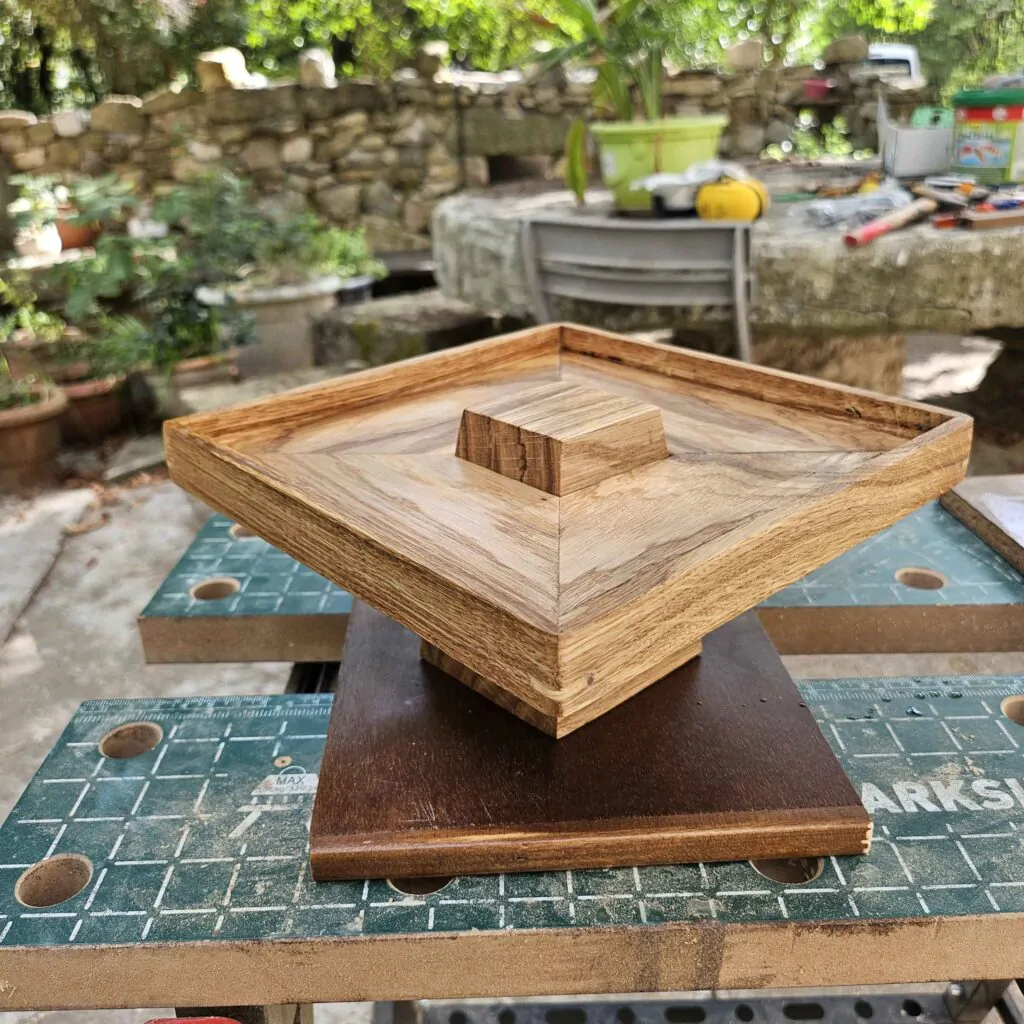
The tray needed a rim so the bread would stay in place. I cut into the top to leave a border all the way round. There is an opening in the centre: the top of the base fits into it when the two parts are put together.
5. Sanding and linseed oil
I sanded the whole piece, then applied a light coat of linseed oil. The grain showed up, the 45° lines on the tray became clearer, and the oak looked much warmer.
Feedback and lessons learned
Photos and rough sizes are not a plan. The test piece in scrap was. It let me make the mistakes on cheap wood.
The templates mattered as much as the oak. Four matching angles on the base, and four 45° joints on the tray, are hard to get right without a guide. The wide base had to be glued up first, then shaped. The rim only works if you cut into the tray; the photos did not show how deep to go.
The linseed oil was a small step, but it changed the look a lot. That is when the piece started to feel finished.